Lost in the Beauty of Brussels: A View You’ll Never Forget
Brussels isn’t just the heart of Europe—it’s a city that reveals itself slowly, through quiet alleyways, golden sunsets over cobblestone squares, and unexpected rooftop vistas. I came looking for sights but stayed for the viewing moments—those breathless pauses when the world below feels both distant and deeply alive. From hidden terraces to cathedral towers, Brussels offers viewing experiences that go beyond postcards. This is about discovering not just where to look—but how to truly see. It’s in these elevated glances and quiet observations that the city becomes more than a destination; it transforms into a living canvas of light, history, and human rhythm.
Why Brussels? The City That Surprises Through Its Views
Often dismissed as little more than the bureaucratic capital of the European Union, Brussels is frequently overlooked by travelers seeking the romance of Paris, the charm of Amsterdam, or the grandeur of Vienna. Yet those who pause long enough to look closely discover a city rich with visual depth and architectural poetry. Far from being a faceless hub of politics, Brussels is a layered metropolis where centuries of design coexist in quiet harmony. Here, Gothic spires rise beside sleek glass towers, while Art Nouveau façades—ornate with floral ironwork and flowing stone—stand just steps from bustling modern boulevards.
What makes Brussels truly special is not just its landmarks, but the way they frame the act of seeing. Unlike cities built for panoramic dominance, Brussels reveals itself in fragments—through a narrow lane that opens suddenly onto a sunlit square, or from a quiet staircase leading to an unmarked rooftop. These moments of visual surprise are not accidental; they are woven into the city’s urban fabric. The beauty lies not only in what you see, but in how you come to see it—gradually, thoughtfully, and often without realizing you’ve stumbled upon something unforgettable.
This layered identity makes Brussels an ideal destination for travelers who value discovery over checklist tourism. Its skyline doesn’t shout for attention, but it rewards those who look up, linger, and take the time to notice the subtle play of shadow and light across centuries-old stone. Whether it’s the gilded rooftops of the Grand Place catching the last rays of dusk or the way morning mist curls around the domes of the Royal Palace, Brussels invites a slower, more attentive form of travel—one rooted in observation, presence, and the quiet joy of perspective.
Grand Place at Golden Hour: Beauty That Feels Unreal
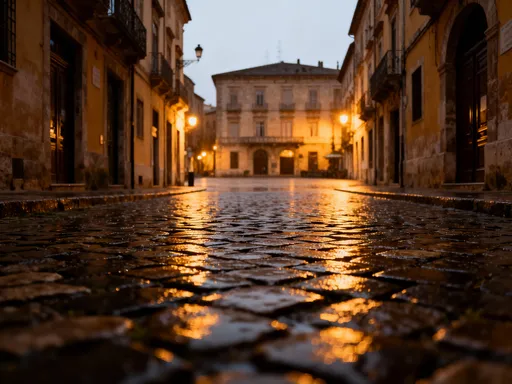
No view in Brussels captures the imagination quite like the Grand Place at golden hour. As the sun begins its descent behind the guildhalls, the entire square seems to catch fire. The golden facades—adorned with intricate sculptures, ornate balconies, and shimmering statues—glow with an almost supernatural warmth. If it has rained earlier in the day, the cobblestones become a mirror, doubling the brilliance above and creating the illusion of walking on light itself. This is not merely a sight to photograph; it is an experience to be absorbed, a moment when architecture and atmosphere merge into pure emotion.
The magic of the Grand Place is deeply tied to timing. While the square is impressive at any hour, it is in those final 45 minutes before sunset that it becomes transcendent. The crowds, often dense during midday, begin to thin. The harsh glare of daylight softens, replaced by a diffused, golden radiance that enhances every curve and carving. For the most immersive experience, visitors are encouraged to step into the side alleys—Rue au Beurre, Rue des Harengs, or Rue du Marché aux Herbes—where narrow passages frame the square like living paintings. From these vantage points, the scale of the architecture feels even more awe-inspiring, and the sense of history more immediate.
Another underused strategy is to find a seat on one of the upper-floor terraces of the surrounding buildings. Some of the older hotels and restaurants offer outdoor seating with unobstructed views, allowing guests to sip a warm drink while the sky shifts from amber to deep violet. These spots are rarely advertised, but a polite inquiry at a local establishment can sometimes lead to a quiet corner with a front-row seat to one of Europe’s most beautiful urban spectacles. The key is not to rush. Let the light change. Watch the lanterns flicker on. Feel the cool evening air rise from the stones. In that stillness, the Grand Place stops being just a postcard and becomes a living memory.
Mont des Arts: Where the City Unfolds Like a Map
For a broader, more structured view of Brussels, few places rival the Mont des Arts. Perched on a gentle hill between the historic upper town and the European Quarter, this cultural garden offers one of the most comprehensive panoramas in the city. From its central terrace, the rooftops of central Brussels stretch out like a hand-drawn map—tile by tile, spire by spire. The Royal Library of Belgium anchors one end of the vista, its neoclassical façade glowing in the morning sun, while the modern curves of the Flagey Building and the distant silhouette of the European Parliament add contemporary contrast.
What makes Mont des Arts particularly special is its balance of nature and architecture. The terraced gardens, filled with seasonal blooms and shaded pathways, provide a peaceful setting for contemplation. Benches line the edges of the overlook, inviting visitors to sit and absorb the view at a leisurely pace. In spring, cherry blossoms frame the skyline; in autumn, the changing leaves add warm reds and golds to the cityscape. The combination of cultivated greenery and urban grandeur creates a uniquely serene atmosphere—one that feels both cultivated and spontaneous.
To experience Mont des Arts at its best, timing is essential. Early morning visits, ideally between 7:30 and 9:00 a.m., offer the clearest light and the fewest tourists. At this hour, the air is crisp, the city is just waking, and the soft morning mist often lingers over the rooftops, giving the scene a dreamlike quality. Photographers will appreciate the even lighting, while casual observers will enjoy the quiet rhythm of the city coming to life—bakers opening their shops, delivery vans navigating narrow streets, and the first trams gliding through the valley below.
The area is also a cultural crossroads, home to the Musical Instruments Museum, the Royal Theatre, and several art galleries. Visitors can combine a visual feast with a dose of culture, perhaps beginning with a concert or exhibition before stepping outside to take in the view. Whether you come for the art, the history, or simply the panorama, Mont des Arts offers a moment of clarity—a place to stand back, literally and figuratively, and see Brussels as a whole.
Not Just Ground Level: Climbing the Mini-Europe Observation Tower
For a completely different perspective, a short journey north to Laeken brings travelers to the Mini-Europe park and its 60-meter observation tower. While the park itself is known for its detailed models of European landmarks, the real hidden gem is the tower’s viewing platform. From this height, the entire northern sector of Brussels unfolds in a sweeping arc—industrial zones blend into residential neighborhoods, parks stretch toward the horizon, and the iconic Atomium stands like a sentinel in the distance. It is a view rarely seen by tourists, yet it reveals an essential truth: Brussels is not just a historic city, but a living, evolving urban landscape.
The climb up the tower is gradual, with wide stairs and safety rails ensuring accessibility for most visitors. As you ascend, the miniature replicas below shrink into a mosaic of color and form, reminding you of Europe’s architectural diversity. But once you reach the top, the focus shifts entirely to the real city. On a clear day, visibility extends for miles, allowing you to trace the green belt of the Sonian Forest to the southeast, the looping curves of the Brussels Ring Road, and the clusters of modern office buildings that house European institutions. It’s a perspective that challenges the common image of Brussels as merely a medieval core surrounded by bureaucracy—it shows a city of neighborhoods, gardens, and everyday life.
What makes this vantage point particularly valuable is its northern orientation. Most iconic views of Brussels look inward—toward the historic center. But from here, you look outward, seeing how the city connects to the wider region. The view includes working-class districts, university campuses, and green spaces that are vital to the lives of local residents. It’s a reminder that beauty in a city isn’t only found in preserved squares or gilded halls, but in the patterns of daily existence—the way streets curve around parks, how light falls on apartment balconies, or how tram lines weave through tree-lined avenues.
Families with children often enjoy the playful context of Mini-Europe, but adults seeking a more reflective experience will find equal reward. Bring a pair of binoculars, a notebook, or simply a willingness to pause. The tower offers not just height, but distance—a chance to see Brussels not as a collection of attractions, but as a complete, breathing entity.
Hidden Rooftop Cafés and Quiet Corners
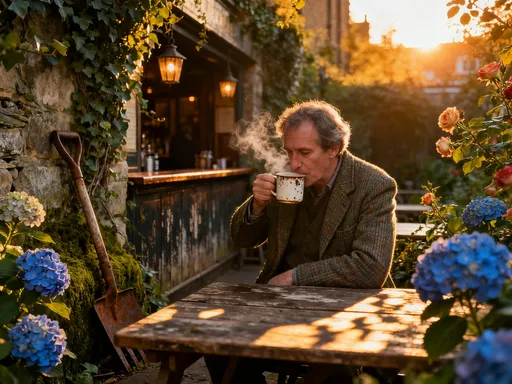
While grand vistas have their place, some of Brussels’ most memorable views come from unassuming locations—places that don’t appear on maps but are cherished by locals. One such spot is a small café tucked above a cobbled lane in the Sablon district. From its wooden terrace, visitors can look out over a quiet street lined with antique bookshops, art galleries, and centuries-old townhouses. In the early afternoon, sunlight slants between the buildings, illuminating dust motes and casting long shadows. A cup of coffee here feels less like a drink and more like a ritual—a moment of stillness in a city that often moves too fast.
Another hidden gem is a secondhand bookstore near the Marolles neighborhood, where the top floor opens into a reading nook with large windows facing east. From this quiet perch, the skyline is dotted with church spires—Notre-Dame du Finistère, Église Saint-Géry, and the distant peak of the Cathedral of St. Michael and St. Gudula. On weekends, the sounds of the flea market drift upward, mingling with the soft rustle of turning pages. There is no menu, no entrance fee—just the unspoken understanding that this is a place to read, reflect, and look.
These spaces are not designed for mass tourism. They do not have souvenir shops or guided tours. Instead, they thrive on discretion and authenticity. Finding them requires wandering without a strict agenda, asking friendly shopkeepers for recommendations, or simply following your curiosity down a side street. They are the kind of places where time slows, where the act of seeing becomes intertwined with feeling. In a world of crowded attractions and timed entries, such spots are rare—and all the more precious for it.
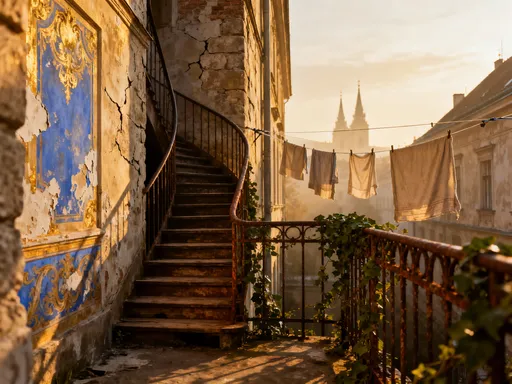
Other quiet viewing corners include the upper gallery of the Church of St. John the Baptist at the Béguinage, where a single bench faces a secluded garden, and a small park near Place du Jeu de Balle, where ivy-covered walls frame a view of laundry lines and tiled roofs. These are not destinations in the traditional sense, but moments—fleeting, personal, and deeply human. They remind us that beauty in a city is not always monumental; sometimes, it is found in the ordinary, the overlooked, the quietly enduring.
The Role of Weather and Light in Shaping the Experience
One of the most profound lessons Brussels teaches is that a view is never fixed—it changes with the weather, the season, and the hour. A square that looks dull under a gray winter sky can become magical when a sudden break in the clouds allows a shaft of sunlight to illuminate a fountain or gild a rooftop. The city’s frequent overcast conditions, often seen as a drawback, actually enhance the drama of these moments. When the sun appears, it feels earned—a gift for those who waited.
Winter in Brussels brings a unique atmosphere. Morning fog often settles in the lower streets, leaving the upper spires and towers floating above a sea of mist. The light is soft, diffused, and ideal for photography. Rain, far from being a nuisance, adds texture—wet cobblestones reflect neon signs and streetlamps, turning ordinary alleys into shimmering corridors. Locals know to carry a compact umbrella and a light raincoat, not to avoid the weather, but to embrace it as part of the experience.
Spring, by contrast, brings a gentler palette. The chestnut trees along Avenue Louise bloom in April, their white flowers creating a canopy of light. Morning light during this season has a delicate clarity, perfect for long walks through the Bois de la Cambre or quiet moments in the Japanese Tower gardens. Summer evenings stretch late, with golden light lingering past 9 p.m., ideal for rooftop drinks or twilight strolls along the Canal. Autumn returns a sense of introspection, as golden leaves swirl in the wind and the city prepares for the quiet months ahead.
The key to appreciating Brussels’ ever-changing moods is patience. Rather than planning every minute of a visit, allow space for unplanned pauses. Sit on a bench in the Parc de Bruxelles and watch how the light shifts over an hour. Return to the same spot at different times of day. Notice how a café terrace feels different in the rain than in the sun. These variations are not interruptions to the journey—they are the journey. They teach a deeper way of seeing, one that values presence over perfection.
How to See Brussels Like a Local: Slow Looking Over Checklist Tourism
In an age of fast travel and curated itineraries, Brussels quietly advocates for a different approach: slow looking. Locals don’t rush from the Grand Place to the Atomium in a single afternoon. Instead, they might spend an hour watching pigeons scatter in the Sablon, or pause to admire the way sunlight hits a stained-glass window in a side street chapel. They understand that the city’s soul is not in its monuments, but in its rhythms—the way bakeries open at dawn, how neighbors greet each other in Flemish or French, or how the tram bells echo through narrow lanes.
Travelers can adopt this mindset by setting aside rigid schedules. Instead of trying to “see everything,” choose one or two viewing spots and return to them at different times. Bring a notebook and sketch what you see. Write down phrases you overhear. Notice the colors, the sounds, the smells. These small acts of attention build a deeper connection to the place. A bench in the Cinquantenaire Park, a quiet corner in the Sainte-Catherine district, or even a bus stop with a clear view of the skyline can become sites of revelation.
Another way to slow down is to engage with local customs. Order a coffee the way locals do—small, strong, and served on a saucer. Visit a neighborhood market, not to buy souvenirs, but to observe the flow of daily life. Ask a shopkeeper about their favorite spot in the city. These interactions rarely lead to grand discoveries, but they create a sense of belonging, of being briefly part of the fabric of the city.
Brussels does not demand admiration. It does not shout its beauty. But for those who are willing to look slowly, to wait, to return, it offers something rare: a sense of intimacy with a place that is often misunderstood. This is not tourism as consumption, but as connection. It is the difference between passing through and truly arriving.
Conclusion: The Art of Seeing—Brussels as a Lens for Deeper Travel
Brussels teaches a quiet but powerful lesson: that the way we see shapes the way we experience the world. In a city where beauty hides in plain sight—in misty alleyways, half-lit courtyards, and rooftop silhouettes—the act of viewing becomes an art form. It is not enough to stand in the right place at the right time. One must also be present, open, and willing to look beyond the obvious.
The views of Brussels are not just visual pleasures. They are invitations—to slow down, to notice, to connect. Whether from the golden glow of the Grand Place, the sweeping panorama of Mont des Arts, or the quiet corner of a neighborhood café, each perspective offers a different way of understanding the city. And in understanding the city, we begin to understand ourselves a little better—our capacity for wonder, our need for stillness, our desire to belong somewhere, even if only for a moment.
This is the deeper value of travel. It is not about collecting destinations, but about cultivating attention. Brussels, with its understated elegance and layered history, serves as a perfect guide. It reminds us that beauty is not always loud or obvious. Sometimes, it is found in the way light falls on a wet street, or how a distant spire catches the last light of day.
So the next time you travel—whether to Brussels or anywhere else—consider leaving the checklist behind. Find a bench. Look up. Let the world reveal itself in its own time. Because the most unforgettable views are not the ones you plan for. They are the ones that find you, quietly, when you’re ready to see.